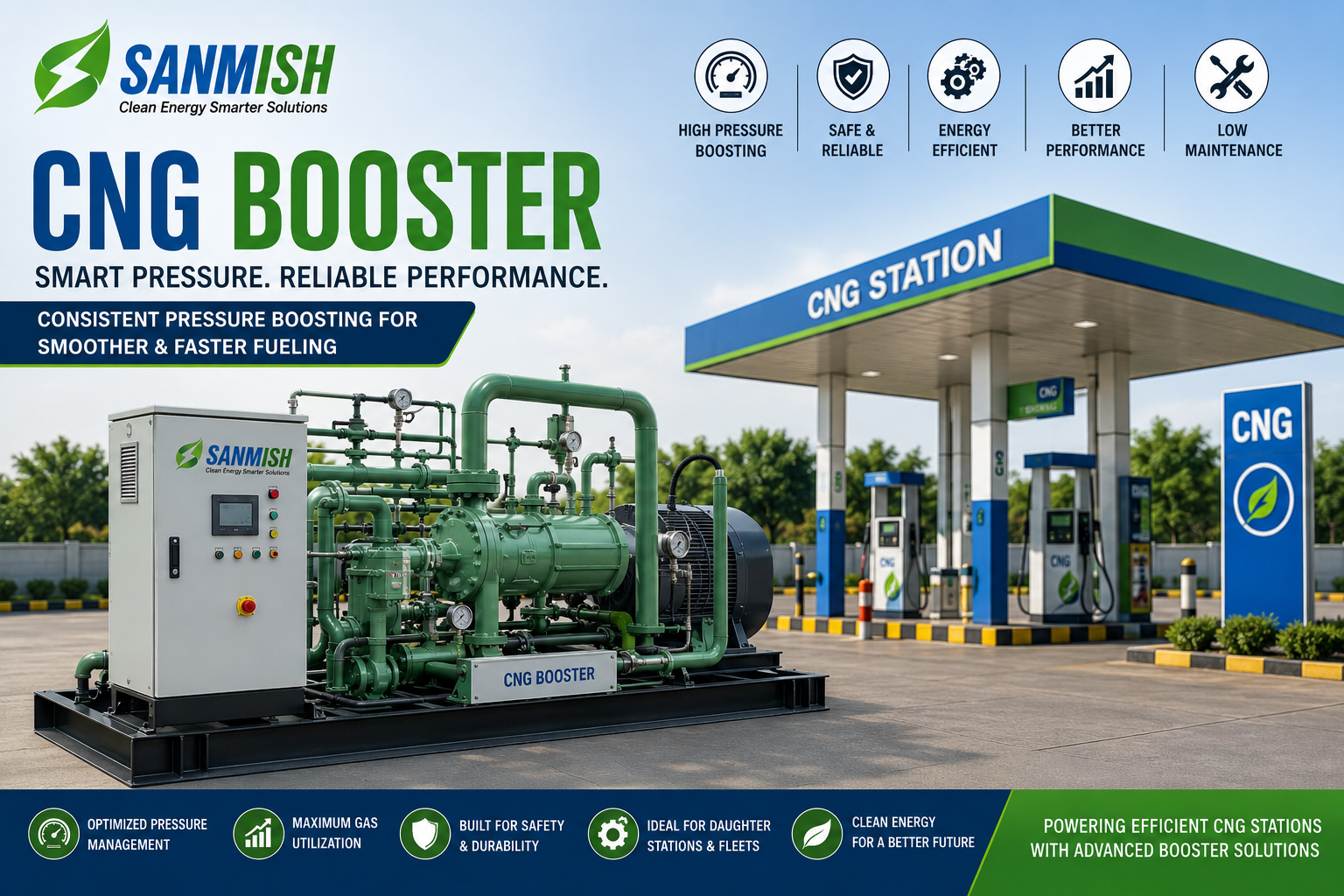
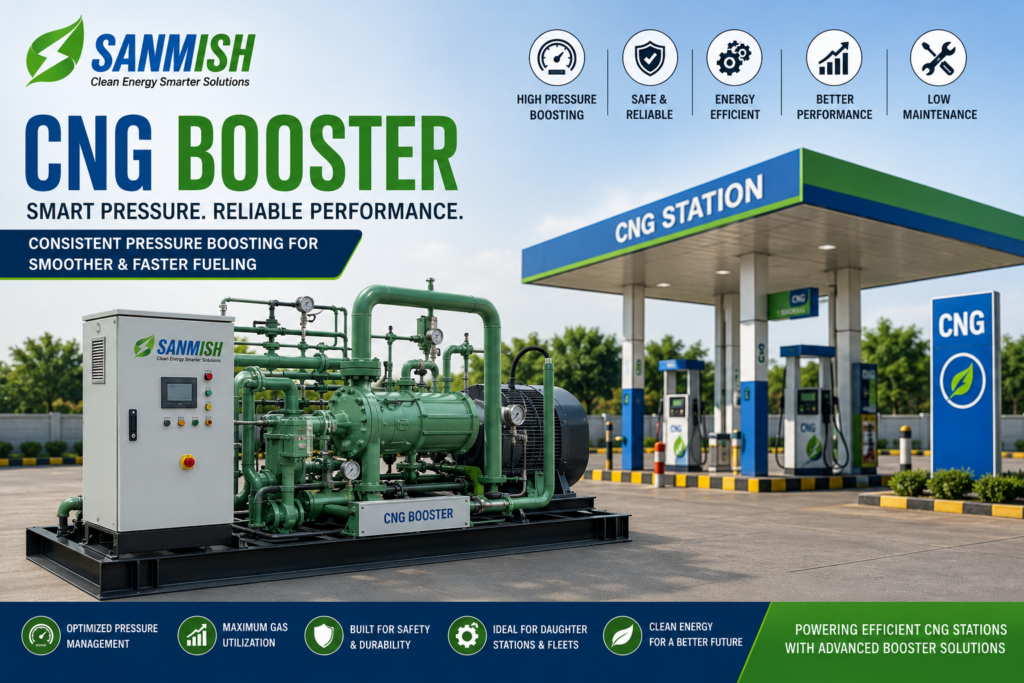
A CNG booster is used when compressed natural gas needs additional pressure before it can be stored, transferred or dispensed efficiently.
In a CNG station, maintaining the required pressure is important. Vehicle demand changes throughout the day, cascade pressure gradually falls during dispensing, and the gas available at the inlet may not always be at the pressure needed for efficient filling.
This is where a booster can become useful.
A properly selected CNG booster helps raise gas pressure to the required operating range while supporting consistent gas delivery across the station.
For station owners, fleet operators and project developers, the important question is not simply “Do I need a booster?”
The better question is:
What pressure, flow and operating conditions does my CNG system actually require?
This guide explains how a CNG booster works, where it is commonly used and what buyers should check before choosing one.
What Is a CNG Booster?
A CNG booster is a gas-pressure boosting system used to increase the pressure of compressed natural gas that is already available at an intermediate pressure.
Instead of treating the booster as an isolated machine, it is better to think of it as part of the overall CNG pressure-management system.
For example, gas may arrive from:
- A mobile cascade
- A fixed cascade
- A gas pipeline
- Another compressed-gas source
The available pressure can gradually decrease as gas is consumed.
The booster helps raise that available gas pressure so the gas can continue moving through the required filling, storage or distribution process.
Sanmish describes its gas boosters as systems designed to increase gas pressure for applications including CNG refueling stations and industrial processes.
How Does a CNG Booster Work?
The basic principle is straightforward.
Gas enters the booster at an available suction or inlet pressure. The booster then compresses the gas further and delivers it at a higher discharge pressure.
In a simplified CNG station flow, the process may look like:
Gas Source → Booster → High-Pressure Storage / Dispenser → Vehicle
The exact configuration depends on the station.
For example, a daughter station receiving CNG through mobile cascades may use boosting equipment to recover more usable gas as the pressure inside the transportation cascade drops.
Without pressure boosting, part of the gas may become increasingly difficult to transfer efficiently as the source pressure approaches the pressure required downstream.
A CNG booster helps manage this pressure difference.
CNG Booster vs CNG Compressor
CNG boosters and CNG compressors are related, but they are not always used for exactly the same duty.
CNG Compressor
A main CNG compressor is generally selected to compress gas from a lower incoming pressure to the much higher pressure required for storage or vehicle fueling.
It can form the primary compression package of a CNG station.
CNG Booster
A booster usually works with gas that already has meaningful pressure available.
Its job is to increase that pressure further or maintain usable pressure as the upstream pressure changes.
A simple way to understand the difference is:
| Equipment | Typical Role |
|---|---|
| CNG Compressor | Primary gas compression |
| CNG Booster | Additional pressure boosting |
| Cascade | High-pressure gas storage |
| Dispenser | Vehicle fueling |
The exact equipment arrangement should always be determined from the project’s actual inlet pressure, discharge requirement and flow demand.
Where Is a CNG Booster Used?
A CNG booster can be used in several types of gas infrastructure.
CNG Daughter Stations
A daughter station may receive gas using mobile cascades instead of having a direct high-capacity pipeline connection.
As gas is removed from the cascade, its pressure falls.
A booster can help recover and transfer more of the available gas while maintaining the pressure required for downstream operations.
CNG Fuel Stations
Some station configurations use boosting equipment as part of their pressure-management system.
The booster may support gas delivery to storage or dispensing infrastructure depending on the station design.
CNG Mobile Refueling Units
Mobile CNG infrastructure can also use boosting equipment.
Sanmish’s CNG Mobile Refueling Unit offering includes booster-compressor provision based on business requirements, alongside cascade storage and vehicle dispensing arrangements.
Fleet Refueling Facilities
Bus depots, logistics fleets, commercial vehicle operators and captive CNG stations may require reliable pressure throughout scheduled fueling periods.
The required booster capacity depends heavily on how many vehicles need to be filled and how quickly.
Industrial Gas Applications
Boosters can also support industrial processes where natural gas has to be delivered at a pressure higher than the available supply pressure.
Key Benefits of a CNG Booster
1. Better Pressure Management
The primary function of a CNG booster is pressure management.
When source pressure falls, the booster can help increase gas pressure to meet downstream requirements.
2. Improved Utilization of Cascade Gas
In cascade-fed systems, pressure naturally decreases as gas is withdrawn.
Boosting can help make more effective use of the gas available in the cascade.
3. Support for Consistent Vehicle Filling
Stable pressure is important for a smooth refueling process.
A correctly engineered system can support the pressure conditions needed by the dispenser during station operations.
4. Flexible Station Design
Not every CNG station has the same gas source.
Some receive pipeline gas, while others depend on transported high-pressure gas.
A booster gives engineers another option when designing a station around changing inlet-pressure conditions.
5. Operational Efficiency
Correct pressure management can improve how compression, storage and dispensing equipment work together.
However, efficiency depends heavily on selecting the correct booster rather than simply installing a larger machine.
Main Components of a CNG Booster System
The exact design varies by manufacturer and application, but a boosting package normally works as part of a larger engineered system.
Important elements can include:
Compression Mechanism
This performs the actual pressure increase.
The appropriate compression technology depends on operating pressure, flow requirement, gas characteristics and duty cycle.
Drive System
The booster needs an energy source to operate its compression mechanism.
The selected drive arrangement should match the site’s electrical or mechanical infrastructure.
Instrumentation
Pressure gauges, sensors and monitoring devices allow operators to understand what is happening at different points in the system.
Safety Systems
High-pressure natural gas requires suitable protection, shutdown logic and pressure-control arrangements.
Control Panel
The control system manages operation and can monitor relevant operating parameters.
Piping and Valves
High-pressure piping connects the booster to upstream and downstream equipment.
Components must be appropriate for the intended CNG pressure and service.
How to Select the Right CNG Booster
Buying a CNG booster should begin with operating data rather than only motor power or machine price.
Here are the most important parameters to discuss with the supplier.
Inlet Pressure
What pressure is available before the booster?
More importantly, what is the minimum expected inlet pressure during operation?
This can be particularly important in cascade-fed installations because source pressure changes as gas is consumed.
Required Discharge Pressure
The engineering team must know what pressure is required downstream.
That requirement may be influenced by storage, dispensing or another process.
Gas Flow Requirement
How much gas needs to move through the system?
This may be expressed using parameters such as SCMH depending on the project specification.
Higher flow does not automatically mean a particular machine is better. The equipment needs to match the real demand profile.
Duty Cycle
Ask whether the booster will operate:
- Continuously
- Intermittently
- During peak demand
- During specific fleet filling periods
Operating pattern affects equipment sizing and thermal management.
Gas Composition
The composition and quality of the gas should be understood before equipment is finalized.
Station Type
A booster intended for a daughter station may face different operating conditions from equipment selected for a captive fleet facility.
Available Utilities
Electricity supply, site layout and supporting infrastructure should also be considered.
Maintenance Requirements
Ask how frequently routine inspection and servicing are required and whether critical spares are readily available.
After-Sales Support
For industrial equipment, purchase price is only part of the decision.
Commissioning support, troubleshooting, spare parts and service availability can significantly affect long-term operation.
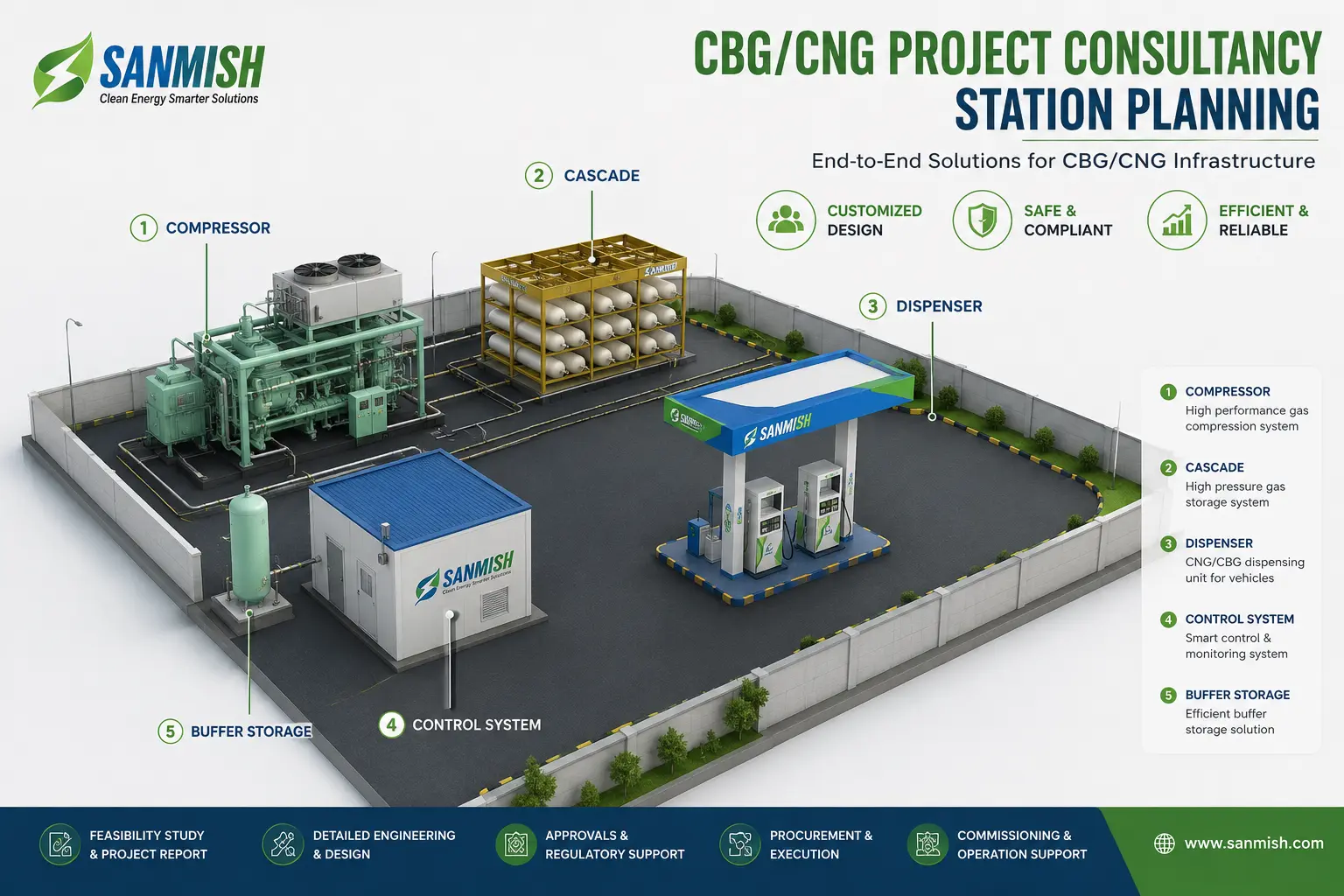
CNG Booster in a Complete Filling Station
A CNG booster usually operates alongside other high-pressure gas equipment.
A simplified station flow might include:
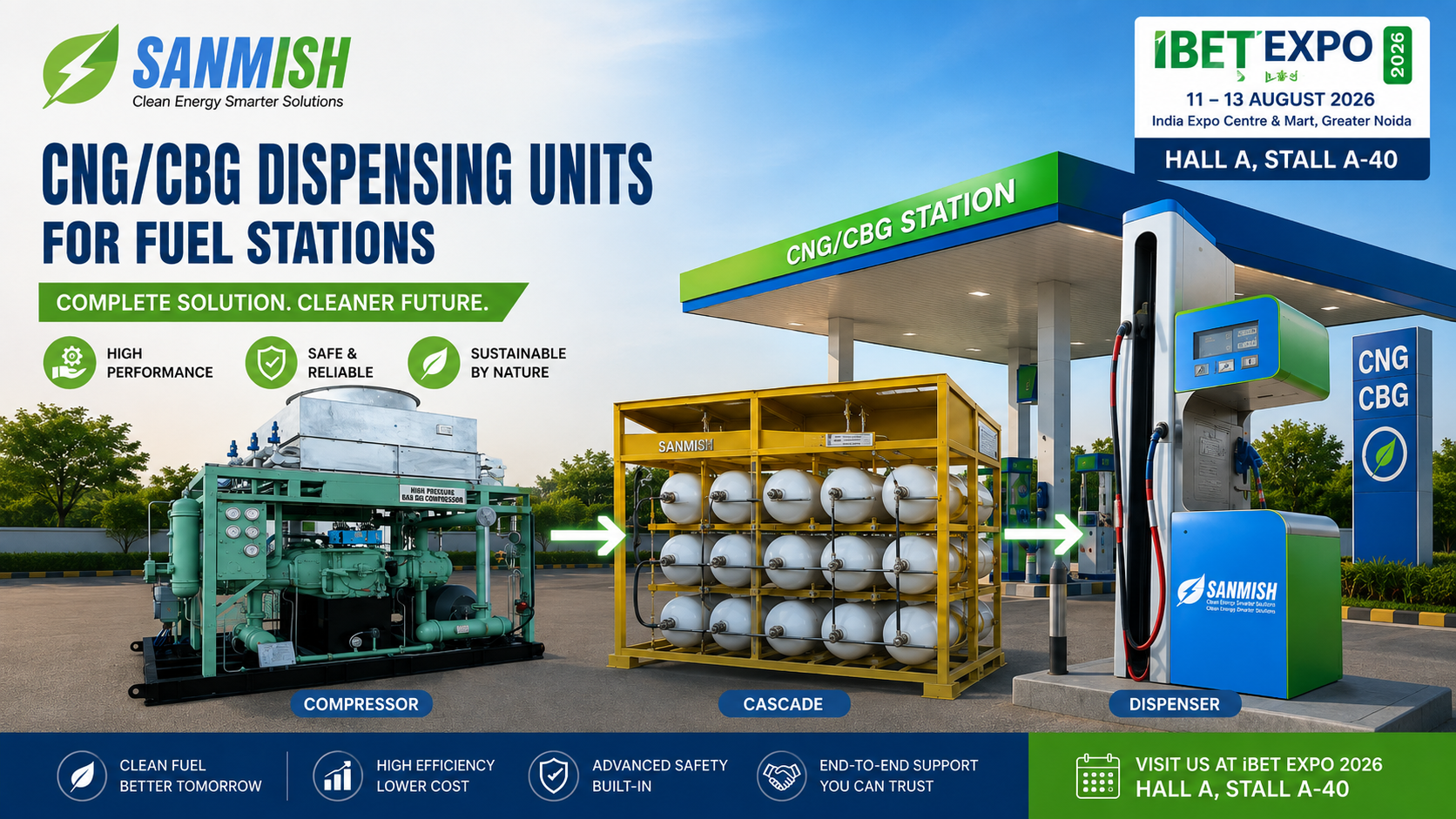
Gas Supply → Booster/Compressor → Priority Control → Cascade → Dispenser → Vehicle
Booster or Compressor
Raises gas pressure to the required range.
Explore Sanmish compressors and boosters.
Priority Panel
A priority system controls how compressed gas is directed between different storage banks or filling paths.
Explore the Sanmish Priority Panel.
Cascade
The CNG/CBG cascade provides high-pressure gas storage.
Sanmish lists Type 1, Type 3 and Type 4 cascade options across its current offering.
Dispenser
The CNG/CBG dispenser transfers gas to the vehicle while supporting the fueling transaction.
The important point is that these components should be selected as a system.
A high-capacity booster cannot compensate for poorly matched storage or dispensing infrastructure.
What Information Should You Give a CNG Booster Supplier?
Before asking for a quotation, prepare a basic technical requirement.
Include:
- Gas type
- Minimum inlet pressure
- Maximum inlet pressure
- Required discharge pressure
- Required gas flow
- Daily gas demand
- Operating hours
- Station type
- Cascade capacity
- Number and type of vehicles
- Expected peak-hour demand
- Site location
- Available electrical supply
Providing this information helps the supplier recommend equipment based on the actual application rather than assumptions.
Maintenance and Safety Considerations
CNG systems operate with high-pressure flammable gas, so safety requirements should be considered from the design stage.
The Petroleum and Natural Gas Regulatory Board publishes technical and safety standards covering CNG retail outlets in India. Current PNGRB regulations include requirements relating to design, equipment, piping, installation, commissioning and other safety aspects of CNG infrastructure.
A station operator should therefore follow the applicable engineering standards, statutory requirements, manufacturer instructions and approved operating procedures for the specific installation.
Routine attention should typically be given to areas such as:
- Gas leakage
- Abnormal vibration
- Operating pressure
- Lubrication where applicable
- Temperature
- Instrument readings
- Valves and fittings
- Electrical systems
- Safety interlocks
- Emergency shutdown systems
Maintenance should only be performed by appropriately trained and authorized personnel.
Signs That Your Project May Need a CNG Booster
A booster may be worth evaluating when:
- Cascade pressure drops significantly during operation
- Available gas pressure is below the downstream requirement
- Gas needs to be transferred from mobile storage
- Vehicle-filling performance changes substantially as source pressure falls
- More gas needs to be recovered from cascade storage
- A daughter-station configuration is being planned
- A mobile refueling solution is being developed
These situations do not automatically mean a booster is required.
A pressure-flow study should determine whether boosting is the correct solution.
Why Correct CNG Booster Sizing Matters
Oversizing equipment can increase capital cost and potentially create unnecessary energy and operational requirements.
Undersizing creates a different problem.
The system may struggle to satisfy peak demand or maintain the intended operating pressure.
The ideal CNG booster should therefore be selected around the station’s actual:
Pressure + Flow + Duty Cycle + Storage + Dispensing Demand
This is why technical consultation before procurement is important.
Sanmish positions its gas boosters around pressure-management requirements for CNG refueling and industrial applications rather than a single universal configuration.
Choosing a CNG Booster Supplier
When comparing suppliers, look beyond the initial quotation.
Ask about:
- Relevant CNG experience
- Engineering capability
- Booster configuration
- Operating pressure range
- Capacity selection
- Control philosophy
- Safety systems
- Installation requirements
- Commissioning support
- Spare-part availability
- Maintenance support
- Integration with existing station equipment
If you are planning a new station, it can also be useful to work with a supplier that understands the surrounding infrastructure rather than only the booster itself.
Sanmish provides a broader portfolio covering boosters, compressors, cascades, dispensers, priority panels and other CNG/CBG infrastructure, allowing the pressure-boosting requirement to be considered within the complete gas system.
Frequently Asked Questions
What is a CNG booster?
A CNG booster is equipment used to raise the pressure of compressed natural gas from an available inlet pressure to a higher pressure required by the downstream system.
Why is a booster used at a CNG station?
It may be used when the available gas pressure is not sufficient for efficient downstream storage, transfer or dispensing.
Is a CNG booster the same as a CNG compressor?
Not exactly.
A main compressor is typically responsible for primary gas compression, while a booster is commonly used to further increase gas that already has significant pressure. The exact distinction depends on the station design.
Can a CNG booster be used with a mobile cascade?
Yes. Boosting systems are commonly relevant to cascade-fed and mobile-refueling arrangements where source pressure declines as gas is withdrawn.
How do I choose the capacity of a CNG booster?
Selection should consider minimum and maximum suction pressure, required discharge pressure, flow rate, duty cycle, daily gas demand and downstream station configuration.
Does Sanmish supply CNG boosters?
Yes. Sanmish lists gas boosters as part of its CNG/CBG equipment portfolio and states that its booster solutions are intended for applications including CNG refueling stations and industrial processes.
Final Thoughts
A CNG booster may look like just another component of a gas station, but its performance is closely connected to the compressor, cascade, dispenser and overall demand profile.
That is why successful selection starts with understanding the pressure and flow requirement.
For project developers, the goal should not be to purchase the biggest booster available. It should be to select equipment that matches the station’s actual operating conditions and can work reliably with the rest of the CNG infrastructure.
For project-specific requirements, explore Sanmish CNG Boosters or discuss your inlet pressure, outlet pressure, flow requirement and station configuration with the technical team.